The Fine Linens Guide · Fabric & Care
Linen or Percale? Comparing Naturepedic and Coyuchi Bedding
The quiet luxury of a well-made bed begins with what meets the skin. Naturepedic’s organic linen and Coyuchi’s organic cotton percale offer two distinct interpretations of breathable bedding: one softly textured and gently relaxed, the other crisp, smooth and close-woven. Understanding the difference comes down to fibre, weave, finish and the kind of comfort you want to return to night after night.
Published 16 November 2026
Two natural fabrics, two different moods
At first glance, linen and percale seem to belong to the same considered world of natural bedding. Both can feel breathable; both can suit people who prefer a less plush, less glossy sleep surface; and both reward attention to laundering and fabric construction. Yet the words describe different things. Linen is a fibre-based fabric made from flax. Percale is a weave, most often made from cotton, in which threads cross in a simple, closely organised pattern.
That distinction is central to comparing Naturepedic organic linen sheets with Coyuchi organic cotton percale. The Naturepedic linen set described here is made from certified organic flax linen, stone-washed for a softened, weighty hand. Coyuchi’s Refined Organic Percale Flat Sheet is made from organic cotton in a tightly woven percale construction. One begins with flax and carries linen’s characteristic irregular texture; the other begins with cotton and draws its crispness from the weave.
Neither fabric is automatically superior. The better choice depends on whether you want a bed that feels relaxed and tactile or one that feels fresh, smooth and neatly tailored. Climate, sleep habits, laundry routines and personal preference matter more than a label suggesting that one material is universally cooler, softer or more luxurious.
What makes linen feel like linen?
Linen is woven from flax fibres, which are naturally strong and have a distinctive, slightly uneven character. That character gives the cloth its recognisable texture: a gentle grain, an easy drape and the softly crumpled appearance that is part of its appeal. Linen bedding is rarely about a perfectly smooth, pressed surface. Its beauty lies in a more lived-in finish, where small creases and shifts in texture read as ease rather than imperfection.
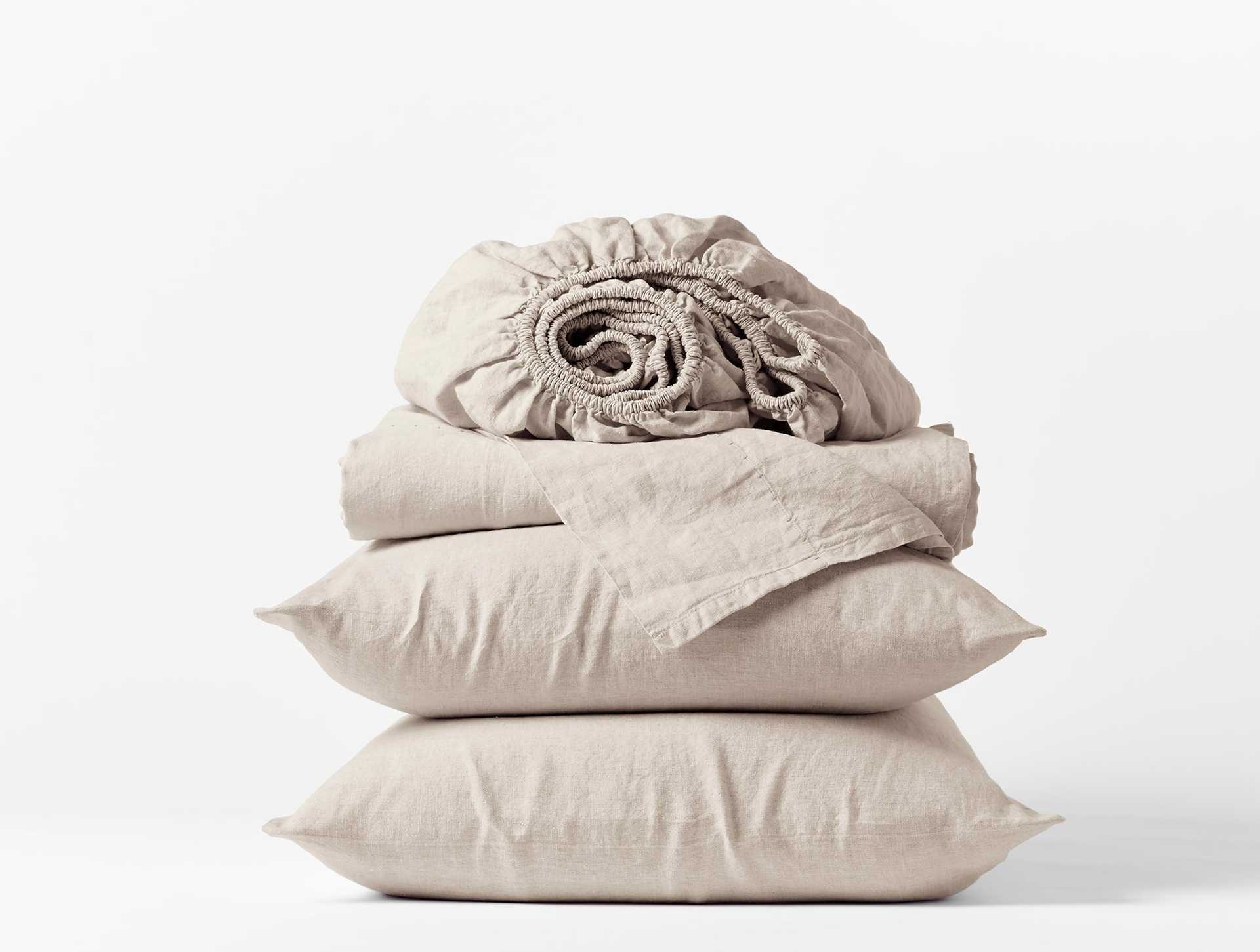
Naturepedic’s organic linen sheets are described as a 185 gsm fabric made from GOTS-certified organic flax grown in France. The sheets are stone-washed, and the range is offered in muted tones including Arctic Snow, Beige, Harbor Island and Forest Canopy. The set includes a flat sheet, a fitted sheet and two pillowcases, with a 15-inch pocket on the fitted sheet. Those details matter in daily use: fabric weight informs how substantial the linen feels, while pocket depth helps determine whether the fitted sheet will sit securely on a mattress.
Linen often feels slightly textured at first, especially to someone accustomed to smooth cotton sateen. It can soften with regular laundering and use, although the pace and degree of change depend on the cloth’s construction and finish. The Naturepedic description notes that the sheets become softer with washing. That is a useful expectation, not a promise that the fabric will transform into something indistinguishable from cotton. Its flax texture remains part of the experience.
People often associate linen with airy comfort and moisture management. Its open, tactile character can make it feel less close and slick than a smooth cotton surface. But “cooling” is not a fixed property that guarantees the same sensation for every sleeper. Room temperature, duvet weight, nightwear and individual comfort all influence how bedding feels. Linen is best understood as a breathable natural fabric with a distinctive hand, not as a substitute for controlling the temperature of a bedroom.
The crisp appeal of organic cotton percale
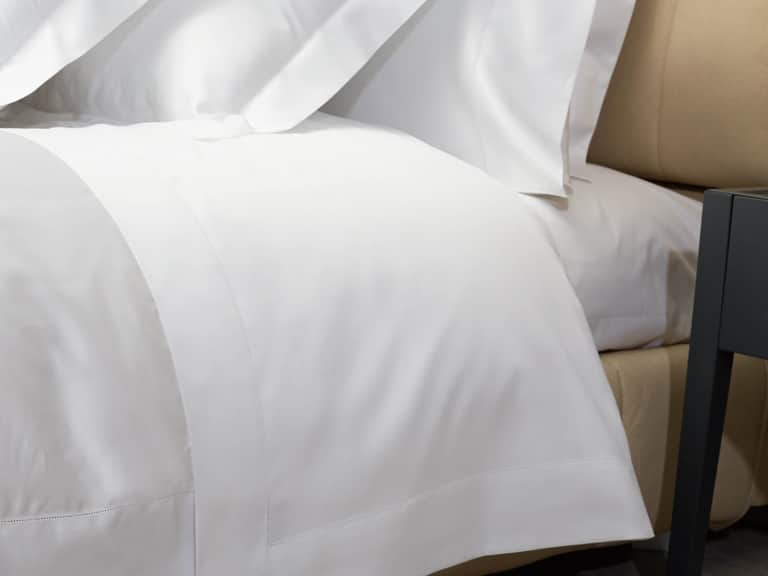
Percale is defined by its weave rather than by a single fibre. In the Coyuchi Refined Organic Percale Flat Sheet, the fibre is 100% organic cotton, grown and woven in India. Its tight, plain weave gives the fabric a clear, crisp character, with a smooth but not especially glossy surface. Percale is often compared to a freshly laundered shirt: composed, cool to the touch and pleasantly structured.
That crispness can be especially appealing to sleepers who dislike a slippery or silky finish. Percale does not usually have the lustre associated with sateen, whose weave creates a smoother, more reflective surface. Instead, it offers a matte look and a neat, breathable feel that sits comfortably within both minimal and traditional bedrooms. The Coyuchi flat sheet has a seven-inch hem, a practical finishing detail that gives the edge a little definition when turned back over the bed.
The Coyuchi sheet is described as machine washable in cold water with like colours and suitable for low tumble drying. It is also finished with a plant-based softener. These care details should be read alongside the garment’s own label, which remains the most relevant instruction for the exact item in your hands. Percale can become more supple through use and washing, but its character tends to remain recognisably crisp compared with relaxed linen.
Thread count is sometimes treated as a shortcut to quality, but it is only one measure of construction and does not tell the whole story. For percale, weave quality, yarn quality, finishing and the feel of the finished fabric all deserve consideration. The useful question is not simply whether a sheet has a high number attached to it, but whether its surface, weight and care requirements suit the way you sleep.
A close comparison: hand, weight and drape
On the bed, the most immediate difference is tactile. Naturepedic linen has a relaxed texture and a more substantial presence, while Coyuchi cotton percale offers a clean, close-woven surface. Linen’s texture is visible as well as felt: it brings quiet irregularity to a bed, especially when left unpressed. Percale reads as more orderly. Its surface is crisp and matte, with a tidy finish that can make a bed feel freshly made even when the styling is simple.
Weight is another point of distinction, though it should not be confused with warmth. Naturepedic lists its linen at 185 gsm, giving the fabric a considered, weighty feel without removing its characteristic breathability. The Coyuchi percale description does not provide a comparable fabric weight, so it would be misleading to claim a precise weight-for-weight comparison. In general, the hand of percale is shaped by its cotton yarns and construction; the finished sheet may feel light, crisp or more substantial depending on those specifications.
Drape changes the visual effect. Linen tends to fall with a softer, more relaxed line and displays creases naturally. Percale makes a flatter, more defined surface, particularly when freshly laundered and smoothed. Neither requires elaborate styling. A linen bed can look especially inviting with a casual fold and layered neutrals; percale can make a restrained, sharply finished bed feel composed without decoration.
Touch is personal, so a description cannot replace handling the fabric. If you can, feel a sample or a washed piece before choosing. Notice whether you prefer a textured hand or a smooth one, whether you enjoy the sound and structure of a crisp sheet, and whether you want the fabric to appear relaxed or freshly pressed. These impressions are more useful than assuming that “organic,” “natural” or “premium” guarantees a particular sensation.
Breathability and comfort through the seasons
Both fabrics can be appropriate throughout the year, but they create different impressions. Naturepedic describes its linen as breathable and temperature regulating, with a looser weave that allows air and moisture to circulate. Coyuchi describes its percale as breathable and suitable for year-round comfort. These are useful material characteristics, but they do not mean that sheets alone determine sleep temperature.
Consider the entire bed. A heavy duvet, a mattress that retains heat, a warm bedroom or synthetic sleepwear may have more influence on overnight comfort than the choice between linen and percale. In a warm room, a breathable sheet paired with an appropriately light duvet may feel more comfortable than a heavy bedding arrangement in any fibre. In colder months, the right layers can add warmth while leaving the sheet choice a matter of preferred texture.
Linen’s open, textured feel may appeal to people who want a less close-fitting sensation against the skin. Percale’s crisp cotton surface may appeal to those who enjoy the feeling of a cool, fresh sheet at bedtime. These are tendencies in the way the fabrics are commonly experienced, not guarantees. Personal temperature perception varies, and the finished fabric’s weight, finish and condition all make a difference.
Care: a small routine, a longer life
Good care begins with the label. Even when two sheets are both natural and machine washable, their recommended water temperature, cycle and drying method may differ. Follow the care directions supplied with the individual product rather than relying on a general rule for all linen or all cotton. Washing with similar colours, using a suitable detergent and avoiding unnecessary harsh treatment are sensible habits for either fabric.
Naturepedic’s care instructions recommend machine washing warm, tumble drying on low, using a warm iron if desired and avoiding bleach. The Coyuchi percale flat sheet is described as machine washable in cold water with like colours and tumble dryable on low. These recommendations are not identical. If you own both, do not assume that they should share every wash setting; sort the load and follow each item’s guidance.
For linen, removing the sheet promptly from the dryer can help avoid deep-set creases. If you prefer a smoother finish, a warm iron can be used as directed, but pressing is optional. The natural texture is part of linen’s relaxed appeal, and many people prefer to let it remain. Avoid over-drying, which can leave fabrics feeling harsher and may put needless stress on fibres over time.
Percale can be dried on low according to the Coyuchi product information. Removing it promptly and folding or making the bed while the fabric is still slightly warm can help maintain a neat appearance. A crisp surface does not require an elaborate ironing ritual. If a particularly smooth finish matters to you, check the specific care label before applying heat.
Wash bedding at a frequency that fits your household, climate and personal needs. Allowing sheets to dry fully before storing them helps prevent mustiness, while a cool, dry cupboard is appropriate for clean spare sets. Care is not merely about preserving appearance: it is also a way of extending the useful life of textiles and making replacement less frequent.
Organic claims and what to check
For shoppers considering organic bedding, certification can help clarify what a claim covers. Naturepedic’s linen is described as GOTS-certified organic, with flax grown in France and the sheets made in a GOTS-certified facility in India. Coyuchi’s Refined Organic Percale Flat Sheet is described as GOTS certified and Fair Trade, made from organic cotton grown and woven in India. These statements refer to the products as described; always verify current certification details and scope with the retailer or certifying organisation if a particular standard is important to your decision.
Country of fibre origin and country of manufacture are not necessarily the same. A fabric may use fibre grown in one place and be spun, woven, dyed or finished elsewhere. Reading the full product description gives a clearer picture than relying on a single country-of-origin phrase. It also helps distinguish the environmental credentials of a material from the broader conditions of its production.
Organic certification does not, on its own, tell you whether a fabric will feel soft, crisp, heavy or light. Those qualities come from fibre, yarn, weave and finishing. Likewise, a natural fibre is not maintenance-free simply because it is natural. Choosing well means balancing sourcing information with practical considerations: fit, durability, laundering, comfort and the likelihood that you will use the bedding for years.
Which one suits your bed?
Choose linen if you are drawn to a softly rumpled look, tactile texture and a fabric that can feel more relaxed than a tightly finished cotton sheet. Naturepedic’s organic linen set may suit someone who appreciates a substantial hand, prefers a naturally textured surface and values a set that includes the main layers of the bed. Its 15-inch fitted-sheet pocket is also worth checking against your mattress depth, including any topper.
Choose percale if you prefer a crisp, smooth and matte surface, and like the sensation of a freshly made bed. Coyuchi’s organic cotton percale flat sheet offers a straightforward way to introduce that weave into an existing bedding set. Because it is a flat sheet rather than a complete set, check the dimensions and how it will coordinate with your fitted sheet and pillowcases before ordering.
Think about your routines, too. If ironing is unlikely to happen, linen’s natural creases may feel freeing rather than frustrating. If a more orderly, crisp finish is part of the pleasure of making the bed, percale may align with your habits. Neither choice should become a test of how carefully you keep house. The best fabric is the one that feels good in your actual bedroom, under your actual duvet, on an ordinary morning.
- For relaxed texture: consider organic linen and embrace its natural creasing.
- For crisp simplicity: consider cotton percale and its clean, matte surface.
- For easier comparison: check fibre content, weave, fabric weight, set contents and care directions.
- For a secure fit: measure mattress depth and compare it with the fitted-sheet pocket.
- For responsible purchasing: look for clear sourcing details and check what any certification covers.
The verdict: choose the feeling, not the fashion
Naturepedic organic linen and Coyuchi organic cotton percale represent two compelling approaches to fine bedding. Linen brings flax’s textured character, a relaxed drape and a finish that softens with use. Percale brings cotton’s familiar hand shaped by a close, plain weave: crisp, breathable and quietly polished. Both can make an elegant bed; each simply expresses comfort differently.
Before choosing, consider what you notice first when you climb into bed. Is it a softly rumpled surface that feels easy and tactile, or a cool, neat sheet with a crisp finish? Then check the practical details: dimensions, pocket depth, set contents and laundry instructions. A little attention to those specifics is more revealing than any single headline claim about luxury or performance.
In the end, the most considered bedding is not necessarily the most elaborate. It is the fabric that suits your skin, your climate and your care routine—and that continues to feel inviting long after the first wash. Linen or percale: the choice is less a contest than a question of texture, answered each night in the language of touch.